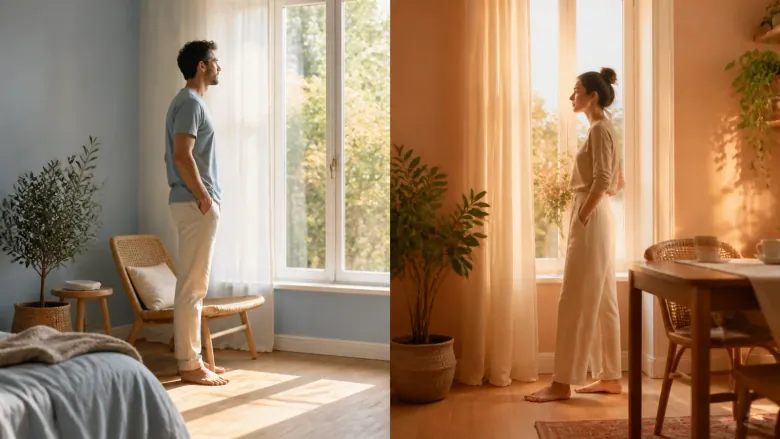
Long-distance relationship video: your two places in one film
Two lives. Shared moments. Your film.
A love film for a long-distance relationship, made from photos of the two of you and your two cities. For an anniversary, Valentine's Day or before you see each other again.
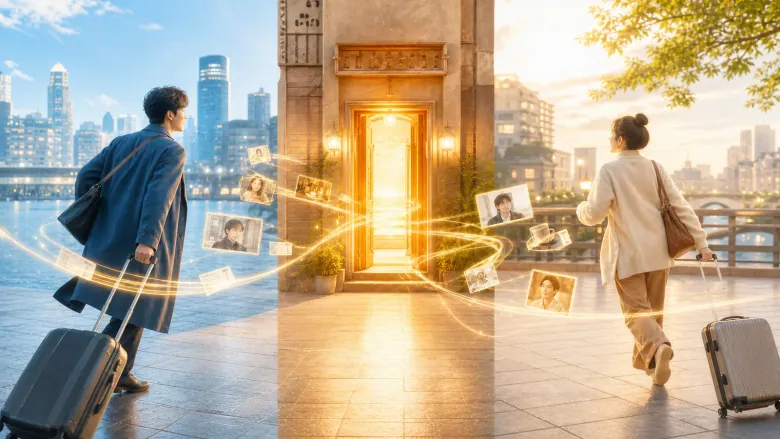
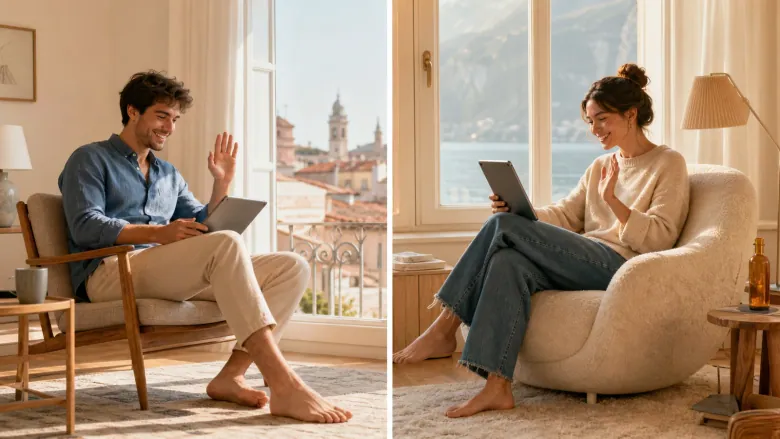
The film shows your everyday life in two places: your street, their apartment, photos from your visits, trips and video calls. It shows how close you are despite the distance. It ends with your message, for example about your next visit.
The photos you need
Choose photos of the people, places and shared moments mentioned.
How you get your film
Pick a film idea for your long-distance relationship, upload photos, answer the questions for the chosen story and confirm the details. The film appears in My Studio. There you can watch it, download it and send it to your partner. A love letter as a PDF can be added.
FILM STORIES
Which film gift feels right for this person?
Do not settle for just any template. Find the story that immediately brings this person and your shared moments to mind.
1–9 of 9 film stories
Two mornings in two places, and still you are a couple.
Two cities, one home
Two cities, two everyday lives: messages, small habits and reunions connect you. A shared decision or a planned meeting leads to the place where you feel at home today.
A lovely fit for
For couples in a long-distance relationship or with a shared story between two places.
Your gift becomes
A friendly film about your way to each other, with anticipation, the places you come from and your life today.
Your half takes shape there, mine here, and together they are done.
Built apart, finished together
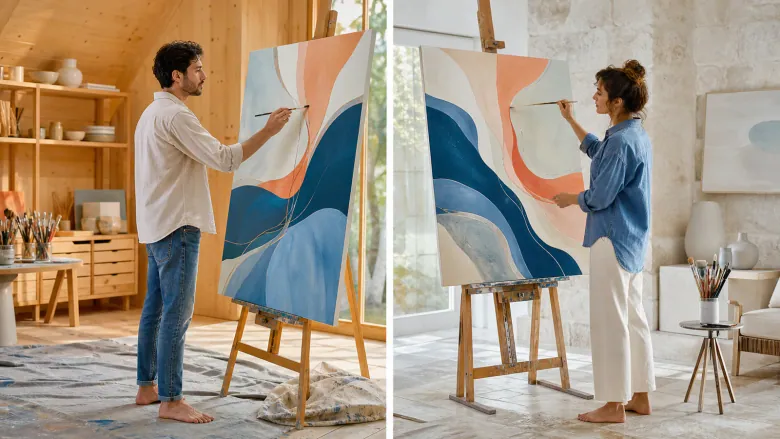
In two places, each of you works on one half of a shared artwork, at different times, with small adjustments and a phone call in between. The film ends when you really join the two halves.
A lovely fit for
For people who live far apart and have made a two-part piece together.
Your gift becomes
A film about two halves that come together and make one finished piece with a message from the two of you.
A new leaf shows up at your place, and I hear about it right away.
Two windows, the same plant
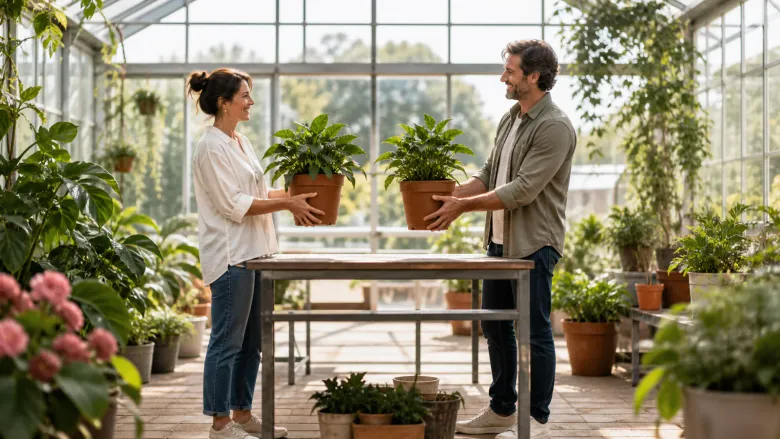
Two people grow the same kind of plant at different windows. Dated photos, your own care choices and short messages show how both plants grow and how you think of each other while they do.
A lovely fit for
For people who live far apart, look after the same kind of plant and share what they notice.
Your gift becomes
A film from the first shoot to today, with a photo comparison of both windows or a real reunion of the plants, and a wish from you.
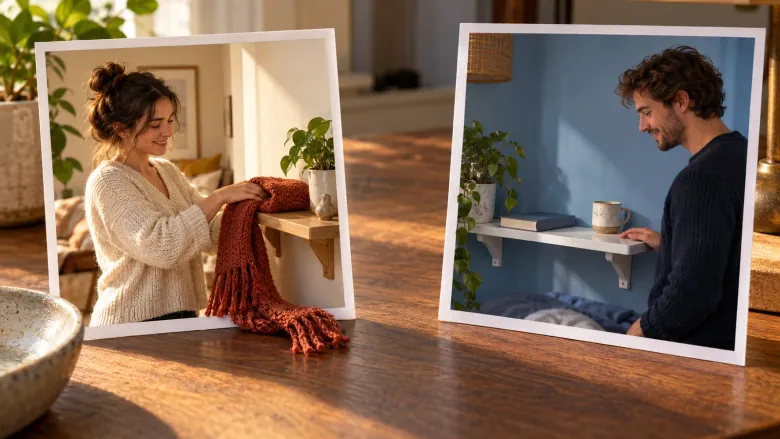
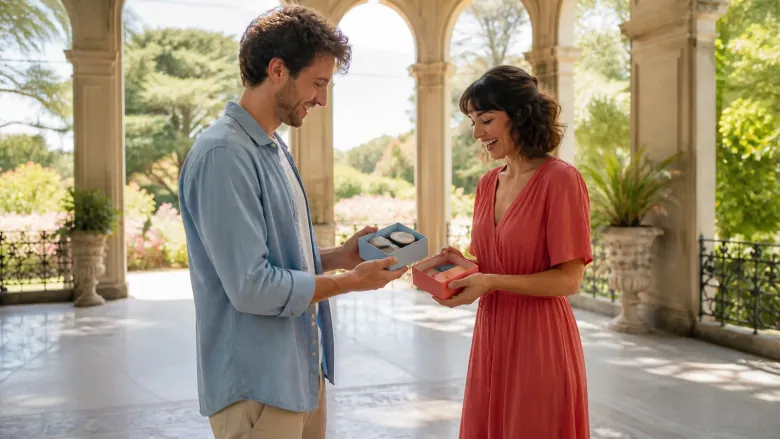
Two small shelves in two homes are at the centre. Using your photos, the film tells which things stayed after your visits and which travelled home again.
A lovely fit for
For long-distance couples, for example for an anniversary or after a visit.
Your gift becomes
A personal film about your visits and the small things they left behind.
For one week each of you takes four photos of your everyday life. The film shows all eight pictures and tells what you said when you first looked at them together.
A lovely fit for
For long-distance couples who share a camera or keep their photos apart by week.
Your gift becomes
A personal film of eight everyday photos that you show each other.
We only have a little time. I want to show you this detail.
Our eight minutes
A short conversation connects your two places. You show each other things from your day, listen, laugh together and say goodbye. The film stays with those few minutes the whole time.
A lovely fit for
For long-distance couples who want to keep a short conversation together.
Your gift becomes
A short, personal film about a conversation that belonged only to the two of you.
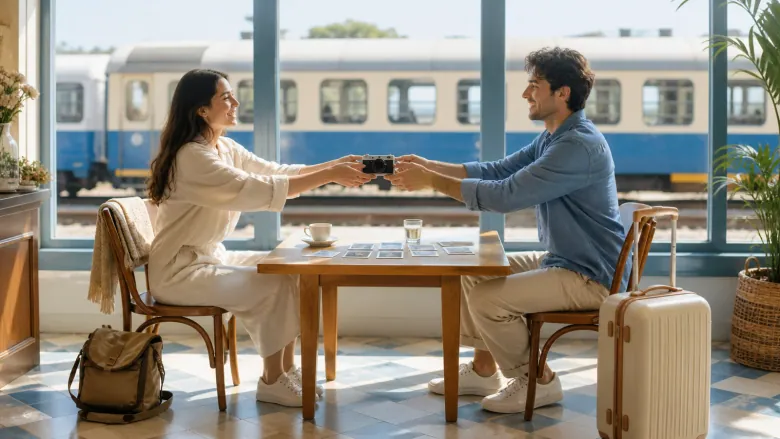
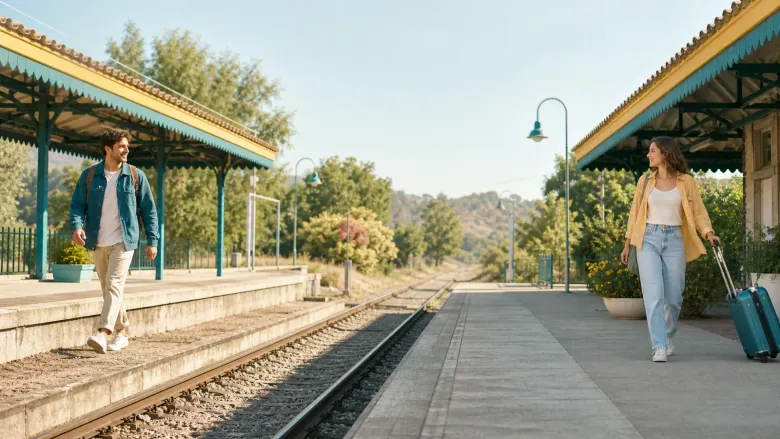
You arrive separately at a place halfway and meet there. Your photos show the waiting, the reunion and your ritual. A train station serves as the common thread.
A lovely fit for
For long-distance couples with a fixed meeting place halfway.
Your gift becomes
A personal film about the place where you always see each other again.